
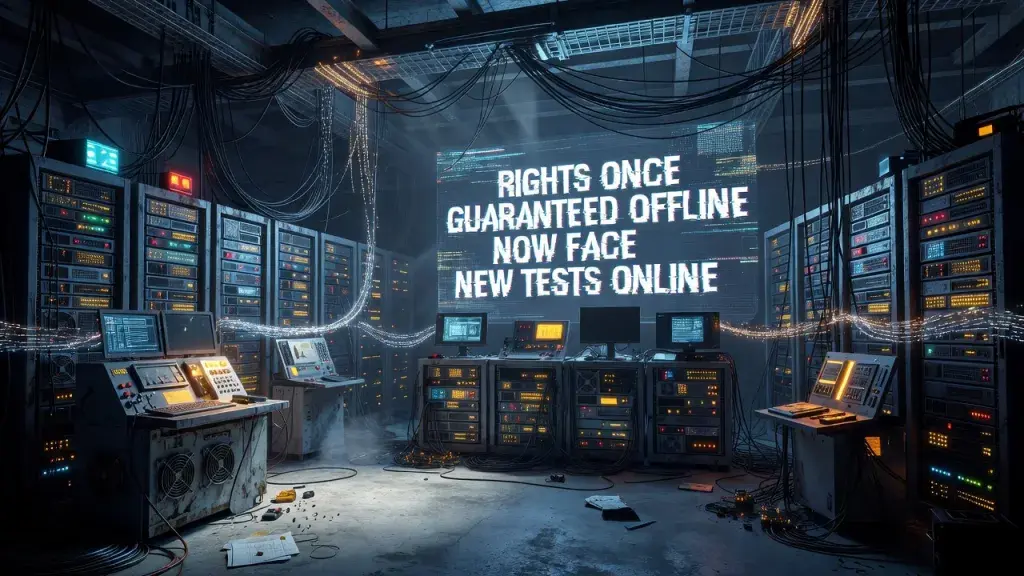
A right does not stop existing the moment someone opens a browser. That is the premise behind the growing push to treat Internet freedom as an extension of established human rights law, rather than a separate or lesser category of protection. Freedom of expression, association, religion, and peaceful assembly do not disappear online; they simply face new mechanisms of interference, from content filtering to network shutdowns to pervasive surveillance.
Governments and civil society groups working on this issue have spent more than a decade building out policy frameworks and funding streams meant to keep the open Internet accessible to ordinary users, including those living under governments that actively restrict it. Much of that effort depends on practical tools, not just diplomatic language. Anti-censorship technology, encrypted communication, and circumvention software form the backbone of what people on the ground actually use to reach an uncensored Internet. Even widely used privacy tools come with limitations worth understanding; for instance, many users assume a VPN automatically masks their physical whereabouts, yet technical and legal factors can interfere with that assumption, a problem explored in detail in this breakdown of why your VPN is not changing your location.
Why Technical Tools Became a Policy Priority
Digital censorship rarely announces itself. It shows up as a blocked website, a throttled connection, or a shadow-banned account, and it has grown more sophisticated as states have invested in filtering infrastructure and surveillance capability. In response, funding for circumvention tools has become a central pillar of Internet freedom programming, with support directed toward technologies that let users route around blocks and reach the open web safely. This is not simply a matter of convenience. For journalists, human rights defenders, and ordinary citizens in repressive environments, access to uncensored information and secure communication can determine personal safety.
The technical mechanisms involved are not exotic. Tunneling protocols, encryption standards, and distributed network architectures all play a role in letting someone in a heavily filtered environment reach information that would otherwise be blocked. But these tools exist within a broader threat model that includes network-level monitoring, legal pressure on service providers, and the jurisdictional reach of the state doing the censoring. A tool that works well in one country may be detected and blocked in another within months, which is why sustained investment and continuous technical adaptation matter more than any single solution.
Surveillance, AI, and the Expanding Battlefield
Surveillance technology and artificial intelligence have complicated this landscape considerably. Tools originally built for legitimate security purposes can be repurposed to track dissidents, profile populations, or suppress dissent at scale. Blockchain and other emerging technologies introduce their own governance questions, since decentralized systems can both strengthen resistance to censorship and create new avenues for abuse. Multilateral bodies, standards organizations, and trade dialogues have become venues where these tensions play out, because technical standards set today shape what is technically possible, and therefore politically possible, for years afterward.
What Comes Next
None of this resolves neatly. Democratic governments continue to balance security imperatives against civil liberties, private companies continue to make decisions with global human rights consequences, and authoritarian states continue to refine their own digital control. The practical result is that Internet freedom will likely remain a contested, resource-intensive effort rather than a settled achievement, with policy engagement and grassroots technical support both required to keep pace with the next generation of restrictive tools.
