
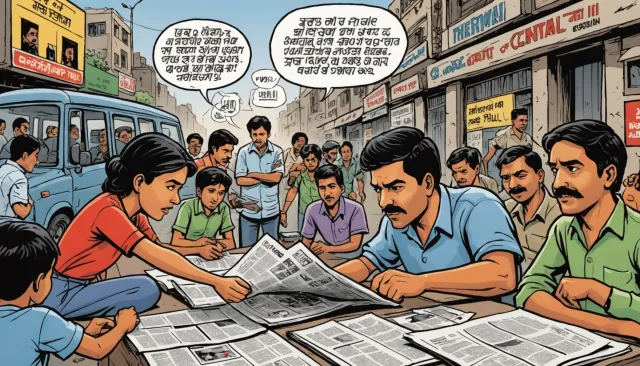
Mobile internet remains severely degraded across parts of central Delhi four days after connectivity was first cut on July 20, with the area around Jantar Mantar - the focal point of ongoing protests - among the worst affected. The disruption has continued despite no public order, notification, or acknowledgment from any government authority explaining its legal basis or scope.
A Shutdown Without a Paper Trail
What distinguishes this episode from previous internet suspensions in India is not just its duration but its opacity. Earlier shutdowns, however controversial, were typically accompanied by formal orders issued under the Temporary Suspension of Telecom Services Rules, 2017, citing public safety or law-and-order concerns. This time, according to reporting by the Hindustan Times, telecom operators including Airtel, Jio and Vi received directions from the government, and services were switched off around 10 am and restored by evening on the day of the parliament march. Yet no ministry or police department has confirmed this publicly. The Internet Freedom Foundation has pointed out that an order which is never published cannot be examined by courts, effectively hollowing out the judicial review that the Supreme Court has said must accompany any shutdown. Without a documented order, affected residents and businesses have no clear avenue to challenge the restriction or even confirm who authorised it. buy vpn
How Shutdowns Are Actually Carried Out
Technically, these suspensions do not require dismantling infrastructure. Telecom providers, acting on government instruction, throttle or disable mobile data on their networks within specified zones, often identified by cell tower coverage rather than precise administrative boundaries - which explains why the effects bleed into surrounding neighbourhoods well beyond the protest site itself. Broadband and landline connections are typically unaffected, which is why some offices and news organisations headquartered in the area have reported partial access even as mobile users remain cut off. Text messages, like the one reportedly received from Airtel informing a subscriber that "internet services have been temporarily stopped in your area," are among the few concrete traces left behind, since operators are bound by the government's instructions but rarely disclose the underlying legal order themselves.
Why This Pattern Matters Beyond Delhi
India has for several years recorded more internet shutdowns than almost any other democracy, a pattern digital rights groups have repeatedly flagged as disproportionate and poorly justified. What makes the Jantar Mantar situation notable is the shift from shutdowns as a rare, formally documented emergency measure to something that appears intermittent, localised and undocumented - making it harder to track, contest, or even prove. The Internet Freedom Foundation has responded by circulating guidance on circumventing restrictions, a sign that civil society is increasingly treating connectivity loss as a recurring hazard rather than an exceptional event. For residents, journalists and protesters alike, the practical effect is the same: an inability to communicate, verify information, or document events in real time, precisely during a period when public accountability depends on that flow of information continuing uninterrupted.
